Emergency & Rescue Lighting Solutions

Where the light reaches, hope does too.

One unit, raised in minutes, wraps the entire scene in soft, even light — no beam to aim, no shadows left behind, nothing drowning out the radio. Because hope doesn't travel in a straight line — and neither should the light that's looking for it.

See Our Lighting Systems
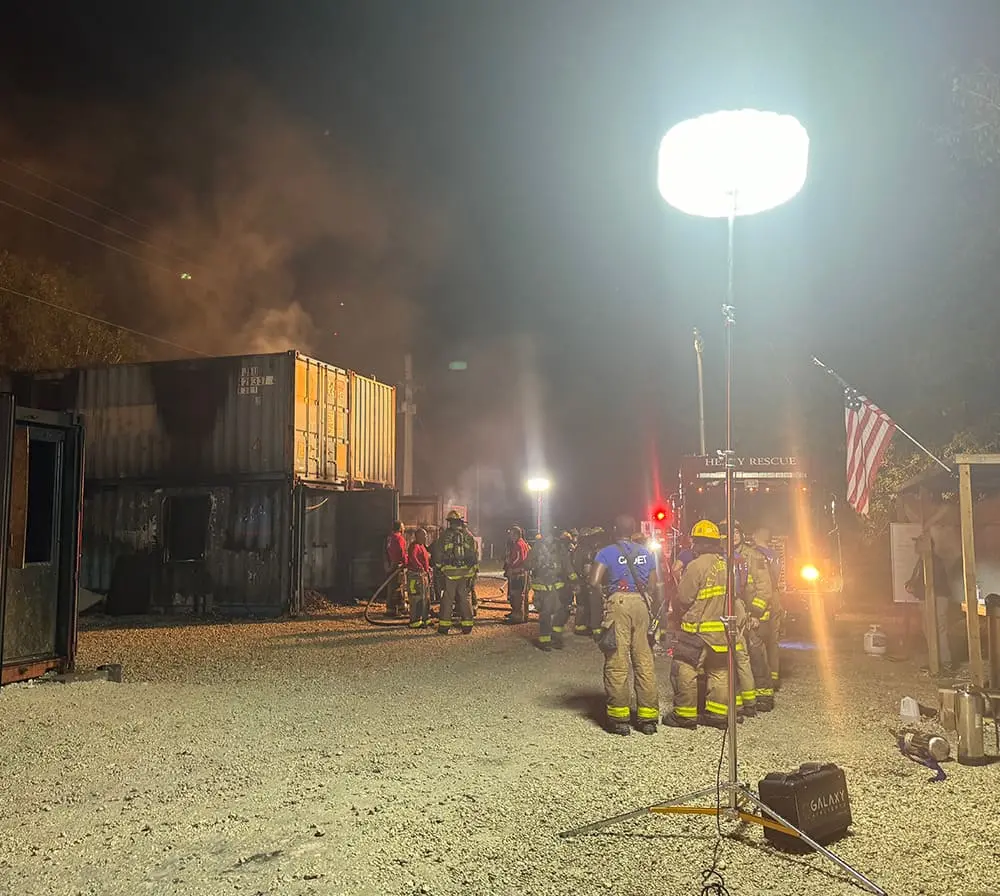
typical night shift

Where the Light Doesn't Reach

An Emergency Doesn't Happen in One Direction

A directional beam assumes there's a side that matters most — a stage to light, an audience to leave in the dark. An emergency scene doesn't work that way: people, vehicles, and debris surround it from every direction, and whatever falls outside the beam doesn't just go dim — it disappears,
Those shadows aren't empty. They're just unlit.

NOWHERE FOR THE DARK TO HIDE

No shadows. No one left behind.

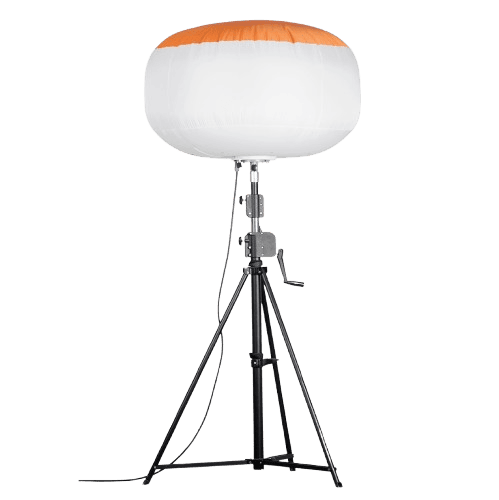
A balloon light doesn't point — it surrounds. Three hundred sixty degrees of even, diffused light, with nowhere for the dark to hide. And on a rescue, the first thing a rescue needs isn't power, it's clarity - the dark is the only thing you're fighting.
ONE LIGHT, THE WHOLE JOB

It's Not Just Brighter. It's Different.

Every shadow on a scene has a cost — in time, in focus, in coordination, in momentum. Take the shadows away, and here's what comes back.
balloon light for firefighting lighting

Search becomes faster

When every part of a scene is visible at once, search teams can assess an area in a single pass instead of repositioning lights to check what's behind them. Fewer passes means less time between arrival and discovery.
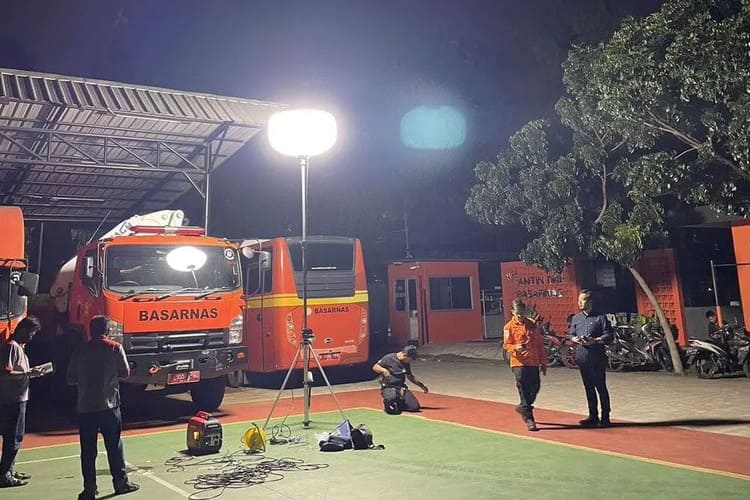
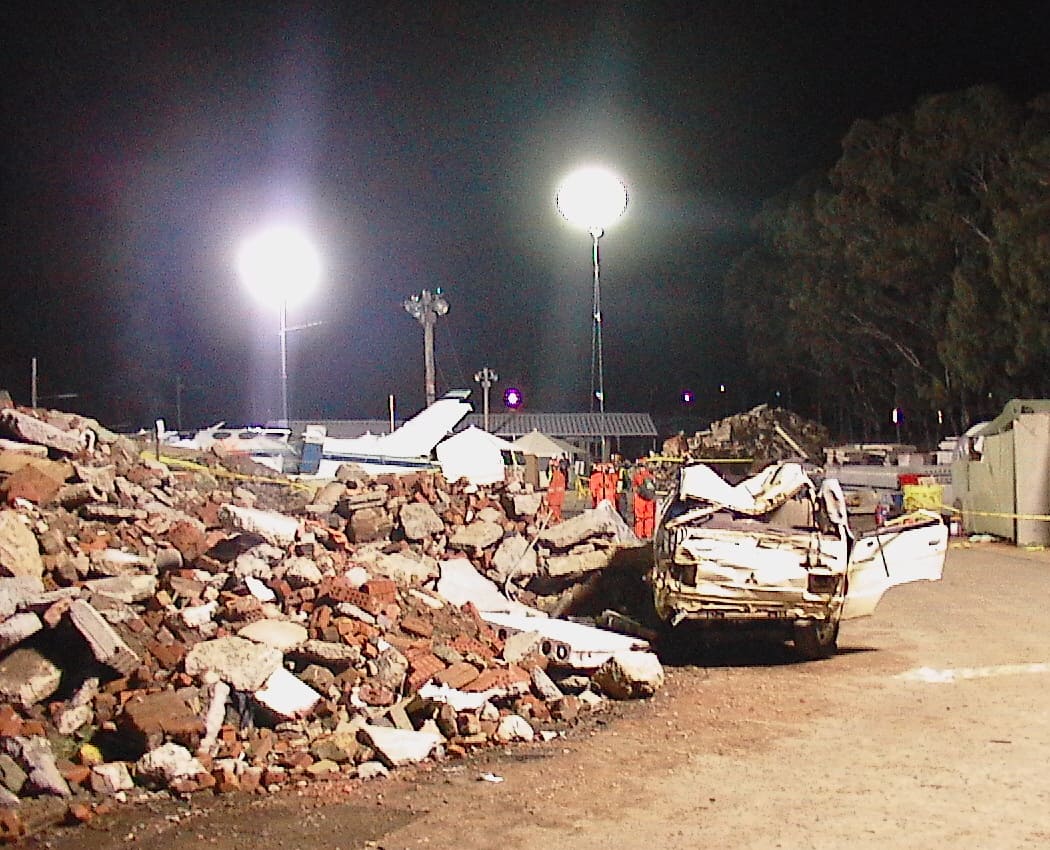
balloon lighting for earthquake lighting

Crews stay sharper, longer

Without glare, rescuers can work facing any direction without losing their vision. Hours into an operation, that difference in eye fatigue adds up — fewer missteps, steadier decisions, right through to the end of the shift.
lighting balloon for earthquake rescue

Coordination holds together

Near-silent operation means radio traffic and spoken commands carry across the site, even with multiple teams working close together. In a fast-moving response, being heard is as important as being seen.
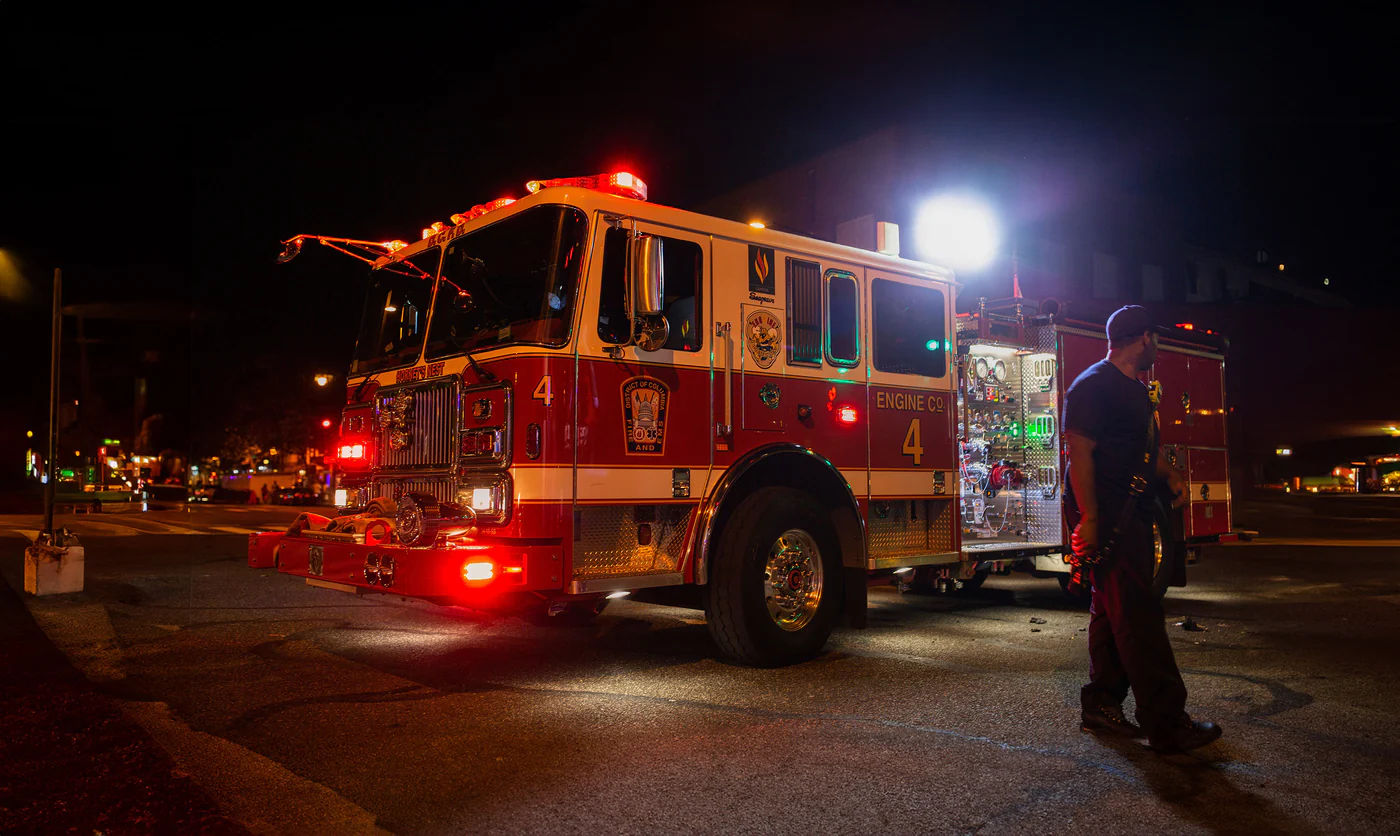
balloon light for firefighting lighting

The light keeps up with the operation

As a search zone expands or a staging area shifts, the light needs to move with it. One person can relocate a balloon light tower in minutes — no re-leveling, no shutting down a generator, no waiting.

NO TWO CALLS ARE THE SAME

Built for the Full Range of Emergency Operations

One lighting system, adaptable across the scenarios emergency teams respond to most
Structure fires & overhaul
Perimeter lighting, staging areas, and overnight scenes that need to stay lit and visible for as long as the incident runs.
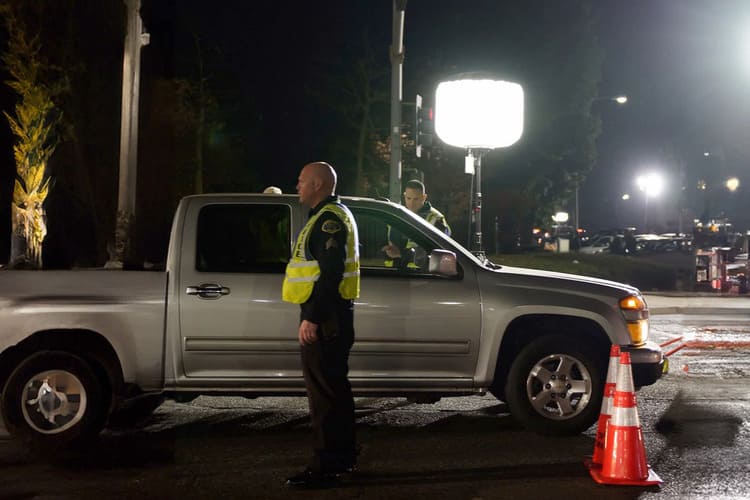
Traffic Accident & Roadway Incidents
Multi-vehicle scenes and extended recovery operations, lit without adding glare for approaching traffic.
Search & Rescue
Collapsed structures, debris fields, and confined-space operations where visibility from every angle determines how quickly someone is found.
Mass Casualty & Triage
Treatment areas that need even, non-glare light for close medical work over extended periods
Utility & Infrastructure Restoration
Overnight repair operations after storms or outages, in locations without existing power.
Shelter & Relief Operations
Temporary camps, distribution points, and staging areas that need to function safely after dark for days at a time.
Same Light, Different Ways In"

However You Arrive, the Light Already Has

On foot, overnight, or on the move — the same diffused-light core, configured for how your team actually deploys.

First off the truck

Battery-powered and built to carry, this is the unit that's up before anything else is — often by the time the rest of the crew is still pulling gear. No generator to start, no cable to run.

Still on at sunrise

For the calls that run all night — overhaul, extended search, a multi-hour restoration — an extended battery pack or generator hookup keeps the same even light running for as long as the operation does.

Moves with the perimeter

When a search area expands, a command post relocates, or a traffic incident rolls down the road, a trailer- or vehicle-mounted unit moves with it — no re-leveling, no waiting for the light to catch up.

Built to survive the conditions it's deployed into

Pick the One That Matches How You Arrive
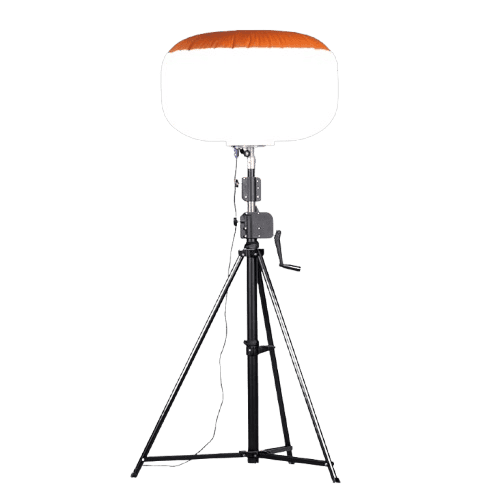
Whichever configuration matches your team — first off the truck, running till sunrise, or moving with the scene — Every unit here runs on the same diffused, glare-free core. What changes is how it's powered, how it's carried, and how long it can run unattended.

Questions From the Field

What response teams ask before adding new equipment to the fleet
portable led construction light towers

How does it perform in high winds or heavy rain?

The diffuser sphere is built from weather-resistant material rated for sustained wind and rain exposure, and its low-profile shape reduces the wind load that affects tall rigid masts. It’s designed to stay operational in the same conditions your team is working in.

What if the sphere is damaged on scene?

The diffuser is built to resist tears and punctures from typical field conditions, and field repair kits allow minor damage to be addressed on site without taking the unit out of service.

Can it operate on unstable or uneven ground?

Yes. Unlike mast-based towers that require leveling on flat, stable ground, balloon light towers are designed to operate on rubble, slopes, mud, and other uneven surfaces — exactly where conventional towers can’t be safely set up.

Does our team need training to operate it?

Setup is intentionally simple — inflate, raise, and power on. Most teams are operational within minutes of their first use, with no specialized certification required.

Can it integrate with the power systems we already use?

Yes. Units are available in battery, solar, and generator-compatible configurations, so they can run independently or alongside the power sources already part of your response fleet.

Heard From the Field

What Changed, According to Them

First time we used it was a three-vehicle collision on the bypass, around 2am. Normally by the time a floodlight's set up, half the crew's already turning away from it. This time nobody mentioned the light at all — everyone was just getting on with it. Took me a minute to realize that was the whole point.
Incident response supervisor— highway recovery
Three nights straight after the last storm, working downed lines. Threw two of these in the truck instead of the usual towers — half the setup, and we weren't burning fuel just to light up a pole that was already half the problem. My crew noticed before I did
Overhead lines crew— utility & storm restoration
Got one up on a pole near the entry point during a collapse. Lit the whole debris field evenly, no hot spots, no corners you had to walk into to check. First time in a while something actually made the job easier, not just brighter
USAR team member
We spent most of a night searching through a collapsed structure. What stood out afterwards was that we weren't stopping every few minutes to drag a light around — it was just lit, the same, everywhere we were working. Made it a lot easier to actually look properly instead of only where a beam happened to land.
Search team member,— disaster response
Set it up at our triage point during a multi-vehicle pileup. No glare means the medics aren't squinting while they're working, and it's quiet enough you can still hear the radio. Small thing, but it's the kind of small thing that matters at 2am
Paramedic, EMS
Make Sure the Light Gets There First

Hope Shouldn't Come Down to Which Light You Brought.

Tell us how your team deploys — on foot, through the night, or on the move — and we'll help you find the right setup.
Talk to Our Team

Light up your evenings

Let's start talking with us

No Matter just Sample Trial or ODM/OEM for Your Brand, We’re the Focused, Professional and Experienced Manufacturer of Inflatable Balloon Light Tower Ready to Help You.
sales@moonlightia.com
(+86) 189 4923 8552
Road East Tianbu, Shushan, Hefei, Anhui, China